Arvid Kappas
Emotion Research


I am a professor of psychology and an emotion researcher at Constructor University in Bremen, Germany. Together with my collaborators, I work on the theory of emotion and its applications, such as affective computing and social robotics. This is my private website.
Emotions are a central aspect of our lives. Poets, novelists, playwrights, artists, and composers have tried to capture the essential experience of emotions for hundreds of years. Philosophers have even debated for millennia what emotions are and how they might relate to reason and our wishes and desires.
In the 19th century, psychology emerged as a science. Emotions played an important part in most psychological theories explaining the human mind and behavior. However, as it turned out, psychology initially had difficulty dealing with the complexity of emotions. In the early 20th century, an influential school of thought - behaviorism - emerged that decided not to deal with the complexities of the mind, and emotion research faded out of focus.
However, in the last 60 years, emotion science has come back with force. At the outset of the 3rd millennium, psychology has transformed into a multidisciplinary endeavor encompassing neuroscience, biology, and social sciences. In consequence, our understanding of emotions is growing dramatically. As engineers have started to build systems that simulate aspects of human emotions, we have moved from a descriptive approach to a world in which we try to implement our knowledge regarding emotions in embodied systems, such as virtual agents or robots. In a recent article, a group of researchers, including myself, have posed the question of whether we are in a period of Affectivism.
I study emotions in the laboratory and have taught the psychology of emotions for three decades. Based on my fascination with the topic and the experience I have accumulated, I intend this website to be a modest collection of resources on emotion or affective science and an outlet for some of my thoughts on the matter. Perhaps some of this content is useful for students or others curious about emotions. Go to the blog here!
Much of my recent research was funded by the European Union in the context of the 7th Framework Program or Horizon 2020. You can discover more about these projects here:
PAST
CYBEREMOTIONS - Collective emotions in cyberspace (final review 2013)
ECUTE - Education in cultural understanding - technology enhanced (final review 2014)
EMOTE - Embodied-perceptive tutors for empathy based learning (final review 2016)www.tiagoribeiro.pt/project/emote/
ANIMATAS - Advancing intuitive human-machine interaction with human-like social capabilities for education in schools (ended 2022)
Reconstructing the Naive Theory of Self was funded by the German Science Foundation (Deutsche Forschungsgemeinschaft, DFG) as part of the Priority Program The Active Self. (ended 2025)
PRESENT
I also collaborate on a Discovery Grant from the Australian Research Council with my colleague Eric Vanman at the University of Queensland and Emily S. Cross at ETH Zürich. We call the project ROSIE Robots as Outgroups: Social Interaction and Empathy
FUTURE
The future is not yet written. But proposals are :-)
Why does man regret, even though he may endeavour to banish any such regret, that he has followed the one natural impulse, rather than the other; and why does he further feel that he ought to regret his conduct? Man in this respect differs profoundly from the lower animals.
Charles Darwin
Descent of Man
About this page
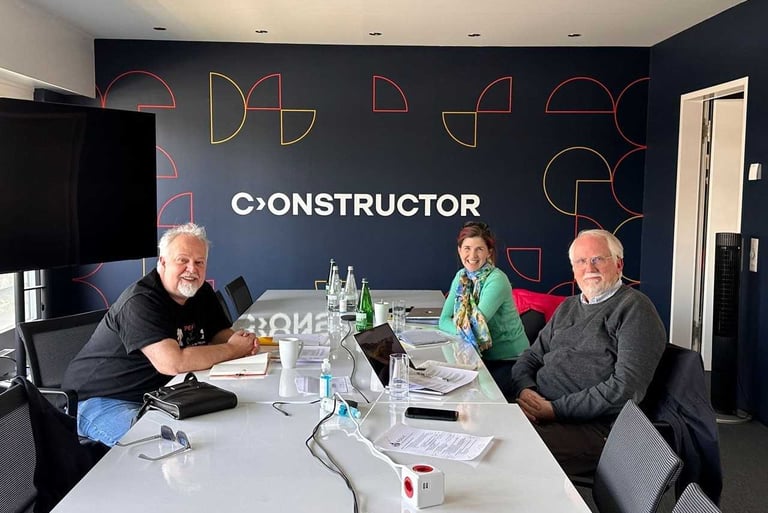
This is my private home page. I mostly write about my professional interests as an emotions researcher interested in the interaction of humans and technology, particularly robots. I work at Constructor University in Bremen, Germany, and my professional info can be found there.
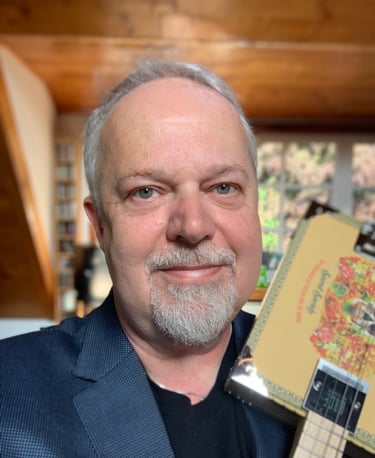
“Emotion is not just an alarm bell—it's the whole tootin' fire truck”
- Arvid Kappas (link)